HOME
: | SPECIAL NOTE : Please feel free to share and publish any of my articles, and kindly credit the author, thank you.

PROFILES - Google-12 Million | Personal | Interfaith Speaker : OldNew | Muslim Speaker : OldNew | Motivational Speaker | CV

Showing posts with label Milaad. Show all posts

Sunday, January 3, 2016

Historical event: Jesus, Muhammad, Martin Luther King and American Dream

“I have a dream” by Dr. Martin Luther King, Jr. was echoed at Saturday’s historic uniting of Christianity and Islam on the steps of the Lincoln Memorial

 http://thearabdailynews.com/2015/12/27/jesus-muhammad-mlk-and-we-have-a-dream/


Mike Ghouse, 
(214) 325-1916
Washington, DC 
 
Dr. Mike Ghouse is a community consultant, social scientist, thinker, writer, newsmaker and a professional speaker on PluralismInterfaithIslam,  politicshuman rights, and foreign policy.  Mike is committed to building cohesive societies and offers pluralistic solutions on issues of the day. More about him in 63 links at www.MikeGhouse.net and his writings are at TheGhousediary.com 

Historical event, Christians and Muslims on the steps of Lincoln Memorial Celebrate Christmas and Milad


Voice of America captures the summary of the event in Video

http://www.urduvoa.com/media/video/3121137.html 

Mike Ghouse, 
(214) 325-1916
Washington, DC 
 
Dr. Mike Ghouse is a community consultant, social scientist, thinker, writer, newsmaker and a professional speaker on PluralismInterfaithIslam,  politicshuman rights, and foreign policy.  Mike is committed to building cohesive societies and offers pluralistic solutions on issues of the day. More about him in 63 links at www.MikeGhouse.net and his writings are at TheGhousediary.com 

Saturday, February 28, 2015

Milaad Speech by Maulan Irtaza Naqvi and Mike Ghouse

Speech at Prophet Muhammad’s (pbuh) birth celebrations 

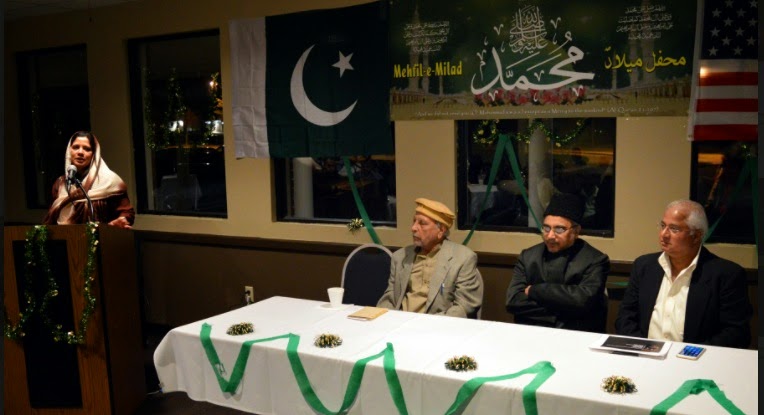
It was a great honor to speak along with Maulana Irtaza Naqvi at Milaad- Prophet Muhammad’s birth celebrations organized by the Pakistan Club of Dallas at Sherrill Park in Richardson, Texas.  It was also a poetry session (naatia mehfil) in praise of the Prophet shared by our respected poets Syed Younus Ijaz, Syeed Qureshi and several others. I have written three pieces on Maulana Naqvi.I was buoyed to learn a few key points in his speech that were fairly supportive of the pluralistic approach to religion. He emphasized the idea of “respecting the otherness of others” without having to agree. I narrated the story of Suleh (peace treaty) Hudabiya with precisely the same line.

Continued at:http://worldmuslimcongress.blogspot.com/2015/02/milaad-speech-by-maulan-irtaza-naqvi.html


I was buoyed to learn a few key points in his speech that were fairly supportive of the pluralistic approach to religion. He emphasized the idea of “respecting the otherness of others” without having to agree. I narrated the story of Suleh (peace treaty) Hudabiya with precisely the same line.  


We both talked about first thing first, that is to be the Ameen; a model of sincerity, truthfulness, trustworthy, and a person around whom other people felt secure.

His point about Hazrat Bilal was powerful – it had three points; knocking the arrogance out, forging the idea that all men are equal, and respecting the otherness of other.

The Arabs like all other people in the world have the arrogance that they are the chosen people, and that their language is superior to others. So when Prophet asked Hazrat Bilal (a freed slave) to give the first public prayer call (Adhan), it must have hurt the knowledgeable literate nobility that they did not get the chance to have that honor, as the prophet said, in the presence of God we are all equal, no matter what faith or race we belong to.

Secondly, Hazrat Bilal could not pronounce the “sh” as in “she” sound in the Adhan part of “Ash-hadu-an La ilaha ilal la”. A few laughed at the mispronunciation but the prophet stopped them, and said, you may not have understood the call, but God did.

Whether you are a former slave or the king, we have to learn to respect the otherness of others.   

Then we spoke the same thought – I mentioned that Quran is not for Muslims alone, but for the entire humanity. The first sentence of the first chapter and the last chapter both address the entire humanity, and not Muslims. He emphasized that, and thoroughly explained the meaning of prophet’s title – Rahmatul Aalameen- Mercy to mankind and not just Muslims.

He also added, that Quran is a book from God as God has made it inclusive of all faiths, Quran acknowledges Judaism and Christianity and others to denote other faiths. Even though in principle there were differences, God still chose to call the people of the book to instill a sense of cohesiveness with people of different faiths. I had emphasized what I had posted on facebook a day ago. “Quran says it clearly and repeatedly - if you take care of fellow beings you need not worry, and also reasserts, whether you are a Jew, Christian, pagan or other... you need not worry as long as you take care of fellow beings.”

Of course as blunt as I am, his narration of miracles of the Prophet that he purified the water in a well and splitting the moon were not needed, but I have no problem with it as others believe in it endearingly. It is the same with Moses, Jesus, Buddha, Hanuman and others – shaft becoming a snake, walking on the water, Immaculate Conception, carrying a mountain on his hands respectively. There was a time in history, external fantastic miracles were needed, but now, their message is good enough.

I asked the audience, who is the first person to initiate interfaith dialogue in the world? I was completely taken back, no one knew it, and there was someone in the front, who called out my name. I quietly moved on.  I had asked the same question in a conference attended by majority of African American Muslims, nearly a third of them said it aloud “America’s Imam Warith Deen Muhammad.” While that is true for America, but not true for the world.

Prophet Muhammad was the first man on the earth to initiate interfaith dialogue. Moses, Krishna, Buddha, Zoroaster, Mahavir or Jesus did not have many faiths to deal when they were preaching, where as prophet Muhammad dealt with Jews, Christians, Zoroastrians, Pagans and others.  I need to speak in Milaad more often; usually they sing Naats/ Nasheeds (in praise of the prophet) or poetry in his honor.

I emphasized on Freedom of speech and gave the example of Adam. It is because of freedom of speech we have been able to pray, preach and propagate Islam, and we have to honor and defend that freedom of speech, we cannot bite the hand that feeds us.  Indeed, we are addressing this issue in our film “Sacred”. The film also exemplifies Prophets Amin Model, Taif-Jesus-Turning the other check Model, and conflict mitigation and goodwill nurturance model. Information for sacred is at www.WorldMuslimCongress.com

I share the meaning of the stories that are never told in the Mosques – of Hijre-Aswad, Suleh Hudabiya, Najran Christians visit and similarities of our immortal declaration of independence and his last sermon – all of them have the prophet’s formula for humanity; conflict mitigation and goodwill nurturance.

I asked people to be merciful to others, if you ask Asiya Bibi, a Christian lady in Pakistan and Pastor NadirKhani in Iran both charged for Blasphemy and Apostasy, if they think Prophet was a mercy to mankind? I don’t think they will, then whose fault is that? Didn’t we push them to say things they really would not have said?  We need to rid of Blasphemy and Apostasy laws, both practices are contrary to the personality of the prophet – i.e., mercy to mankind.


The above points in speech came straight from the following writings:


Thank you

mike

Mike Ghouse, President
America Together Foundation 
(214) 325-1916 text/talk

......................................................................................................................... 

Mike Ghouse is a public speaker, thinker, writer and a commentator onPluralismIslamIndiaIsrael-PalestinePolitics and other issues of the day. He is a human rights activist, and his book standing up for others will be out soon | He is producing a full feature film " Sacred" to be released on 9/11 and a documentary "Americans together" for a July 4 release.  He is a frequent guest commentator on Fox News and syndicated Talk Radio shows and a writer at major news papers including Dallas Morning News and Huffington Post. All about him is listed in 63 links at www.MikeGhouse.net and his writings are at www.TheGhousediary.com - Mike is committed to building cohesive societies and offers pluralistic solutions on issues of the day. 
 

Thursday, February 26, 2015

Prophet Muhammad's birth celebrations speeches by Maulana Naqvi and Mike Ghouse

Speech at Prophet Muhammad’s (pbuh) birth celebrations 

It was a great honor to speak along with Maulana Irtaza Naqvi at Milaad- Prophet Muhammad’s birth celebrations organized by the Pakistan Club of Dallas at Sherrill Park in Richardson, Texas.  It was also a poetry session (naatia mehfil) in praise of the Prophet shared by our respected poets Syed Younus Ijaz, Syeed Qureshi and several others. I have written three pieces on Maulana Naqvi.I was buoyed to learn a few key points in his speech that were fairly supportive of the pluralistic approach to religion. He emphasized the idea of “respecting the otherness of others” without having to agree. I narrated the story of Suleh (peace treaty) Hudabiya with precisely the same line.

Continued at:http://worldmuslimcongress.blogspot.com/2015/02/milaad-speech-by-maulan-irtaza-naqvi.html


I was buoyed to learn a few key points in his speech that were fairly supportive of the pluralistic approach to religion. He emphasized the idea of “respecting the otherness of others” without having to agree. I narrated the story of Suleh (peace treaty) Hudabiya with precisely the same line.  


We both talked about first thing first, that is to be the Ameen; a model of sincerity, truthfulness, trustworthy, and a person around whom other people felt secure.

His point about Hazrat Bilal was powerful – it had three points; knocking the arrogance out, forging the idea that all men are equal, and respecting the otherness of other.

The Arabs like all other people in the world have the arrogance that they are the chosen people, and that their language is superior to others. So when Prophet asked Hazrat Bilal (a freed slave) to give the first public prayer call (Adhan), it must have hurt the knowledgeable literate nobility that they did not get the chance to have that honor, as the prophet said, in the presence of God we are all equal, no matter what faith or race we belong to.

Secondly, Hazrat Bilal could not pronounce the “sh” as in “she” sound in the Adhan part of “Ash-hadu-an La ilaha ilal la”. A few laughed at the mispronunciation but the prophet stopped them, and said, you may not have understood the call, but God did.

Whether you are a former slave or the king, we have to learn to respect the otherness of others.   

Then we spoke the same thought – I mentioned that Quran is not for Muslims alone, but for the entire humanity. The first sentence of the first chapter and the last chapter both address the entire humanity, and not Muslims. He emphasized that, and thoroughly explained the meaning of prophet’s title – Rahmatul Aalameen- Mercy to mankind and not just Muslims.

He also added, that Quran is a book from God as God has made it inclusive of all faiths, Quran acknowledges Judaism and Christianity and others to denote other faiths. Even though in principle there were differences, God still chose to call the people of the book to instill a sense of cohesiveness with people of different faiths. I had emphasized what I had posted on facebook a day ago. “Quran says it clearly and repeatedly - if you take care of fellow beings you need not worry, and also reasserts, whether you are a Jew, Christian, pagan or other... you need not worry as long as you take care of fellow beings.”

Of course as blunt as I am, his narration of miracles of the Prophet that he purified the water in a well and splitting the moon were not needed, but I have no problem with it as others believe in it endearingly. It is the same with Moses, Jesus, Buddha, Hanuman and others – shaft becoming a snake, walking on the water, Immaculate Conception, carrying a mountain on his hands respectively. There was a time in history, external fantastic miracles were needed, but now, their message is good enough.

I asked the audience, who is the first person to initiate interfaith dialogue in the world? I was completely taken back, no one knew it, and there was someone in the front, who called out my name. I quietly moved on.  I had asked the same question in a conference attended by majority of African American Muslims, nearly a third of them said it aloud “America’s Imam Warith Deen Muhammad.” While that is true for America, but not true for the world.

Prophet Muhammad was the first man on the earth to initiate interfaith dialogue. Moses, Krishna, Buddha, Zoroaster, Mahavir or Jesus did not have many faiths to deal when they were preaching, where as prophet Muhammad dealt with Jews, Christians, Zoroastrians, Pagans and others.  I need to speak in Milaad more often; usually they sing Naats/ Nasheeds (in praise of the prophet) or poetry in his honor.

I emphasized on Freedom of speech and gave the example of Adam. It is because of freedom of speech we have been able to pray, preach and propagate Islam, and we have to honor and defend that freedom of speech, we cannot bite the hand that feeds us.  Indeed, we are addressing this issue in our film “Sacred”. The film also exemplifies Prophets Amin Model, Taif-Jesus-Turning the other check Model, and conflict mitigation and goodwill nurturance model. Information for sacred is at www.WorldMuslimCongress.com

I share the meaning of the stories that are never told in the Mosques – of Hijre-Aswad, Suleh Hudabiya, Najran Christians visit and similarities of our immortal declaration of independence and his last sermon – all of them have the prophet’s formula for humanity; conflict mitigation and goodwill nurturance.

I asked people to be merciful to others, if you ask Asiya Bibi, a Christian lady in Pakistan and Pastor NadirKhani in Iran both charged for Blasphemy and Apostasy, if they think Prophet was a mercy to mankind? I don’t think they will, then whose fault is that? Didn’t we push them to say things they really would not have said?  We need to rid of Blasphemy and Apostasy laws, both practices are contrary to the personality of the prophet – i.e., mercy to mankind.


The above points in speech came straight from the following writings:


Thank you

mike

Mike Ghouse, President
America Together Foundation 
(214) 325-1916 text/talk

......................................................................................................................... 

Mike Ghouse is a public speaker, thinker, writer and a commentator onPluralismIslamIndiaIsrael-PalestinePolitics and other issues of the day. He is a human rights activist, and his book standing up for others will be out soon | He is producing a full feature film " Sacred" to be released on 9/11 and a documentary "Americans together" for a July 4 release.  He is a frequent guest commentator on Fox News and syndicated Talk Radio shows and a writer at major news papers including Dallas Morning News and Huffington Post. All about him is listed in 63 links at www.MikeGhouse.net and his writings are at www.TheGhousediary.com - Mike is committed to building cohesive societies and offers pluralistic solutions on issues of the day. 
 

Sunday, February 9, 2014

Prophet Muhammad’s (pbuh) Intrafaith-Interfaith Naatia Mushaera – Poetry Session in Richardson on Friday, February 21, 2014.

URL- http://worldmuslimcongress.blogspot.com/2014/02/prophet-muhammads-pbuh-intrafaith.html

February 8, 2014 - Dallas, Texas: The World Muslim Congress, a think tank of Muslims in Dallas announces a poetry session honoring Prophet Muhammad (pbuh), known as Naatia Mushaera.

"This is a purposeful event with three clear goals; to share Prophet’s work with fellow Americans, to focus on how Muslims can adopt his teachings to benefit the society at large, and to bring Muslims of different denominations together for the common purpose– celebrate Prophet Muhammad’s birthday”- said Mike Ghouse, president of the organization.
 
The program is set to start at 8:00 PM and end at mid night on Friday, February 21, 2014 at Richardson Civic Center in Richardson, Texas. (Link).

The evening is divided into two sessions. The first segment will highlight the Intrafaith and interfaith aspects of the program. Muslims of different denominations including Ahmadiyya, Bohra, Ismaili, Shia, Sunni, WD Muhammad others will share a Naat (poetry singing) each from their community. Then our friends from other faiths will also share their Poetry about the Prophet.

Women and Men will be reciting the Naats together for the first time.

The second segment after the tea break is assigned to our poets and they will recite the purposeful poetry to reflect on Prophet’s work and how we can make that meaningful in our day to day life.  

“Throughout the program, we will be highlighting the inclusive teachings of the Prophet’s wisdom.  The values embedded in the Madinah constitution will be shared, where the prophet signed a declaration with Jews, Christians, Pagans and others. Each member of community was guaranteed the freedom to practice his or her faith freely. Furthermore, In his last sermon, the Prophet declared that all men are created equal, and respecting each human is the right thing to do. Like the people of all faiths, Muslims need to go back to the inclusive values taught by the prophet.” added Mike Ghouse.

Refreshments, tea, and snacks will be served in addition to the special treat – the king of desserts; Laddu.

Shazia Khan will be the master of the ceremonies, and the event will be chaired by a mystery guest of honor, and special guest OS Modgil with host Mike Ghouse. You are invited to, the event, it is free but an RSVP is required at the facebook events “Naatia Mushaera” on February 21, 2014 or email to: rsvpforsure@gmail.com

 
Coming up next

World Muslim Congress To be a Muslim is to be a peacemaker committed to mitigating conflicts and nurturing goodwill, and to build cohesive societies where all of God's creation can live in harmony with each other.

Tuesday, January 14, 2014

Prophet Muhammad's peace formula - Happy Milaad

The 1444th Birth Celebration of Prophet Muhammad

I wanted to understand the prophet as a human with whom I can relate, and critically review his contributions towards creating cohesive societies, where no individual had to live in apprehension and fear of the other. The book, Muhammad by Karen Armstrong was a great help in understanding the man and his decision making process geared to create peaceful societies, and have since come to love his work.

The best way to honor the prophet is to follow him, and become a Rahmat (kind and just) to your spouse, kids, siblings, parents, family, friends, customers, clients, vendors and every human around you. And if others feel safe and secure with you, God and the prophet would be pleased with you.

I have made an attempt to narrate how the 15 incidents were influenced by Prophet Muhammad' peace gene.  
 
 
if you like the article, please click like at Huffpost, share it on your facebook, tweet it... thanks
 

Sunday, February 3, 2013

Prophet Muhammad (pbuh) and I

As a kid I learned things about him and did not relate with him at all, he was too divine and remote for me. All that changed when I read the book "Muhammad" by Karen Armstrong. She narrates his life from a non-religious point of view, as a civic leader of the society, a dimension that I appreciated it very much. Karen Armstrong's book is one of the five reasons I chose to become a Muslim after a lapse of nearly three decades. He was a man that I can relate with, making decisions that create trust, mutual respect and a sense of fairness among his people at that time. That was indeed the role of every prophet and peacemaker of the time. Mike Ghouse

How I Connect With Prophet Muhammad
Published by Huffington Post
On 01/25/2013 9:48 pm
http://www.huffingtonpost.com/mike-ghouse/how-i-connect-with-prophet-muhammad_b_2547782.html


How do I relate with the prophet? I don't wear clothes like him, eat like him or live like him. But when it comes to respecting fellow beings, nurturing goodwill, mitigating conflicts, forgiving others and building cohesive societies, I can relate.

Prophet Muhammad (pbuh) was born on 12th day of Rabi' al-Awwal, the third month of the Islamic calendar, and the year was 571 A.D. The birth celebrations will continue through this week, and if you wish to greet a Muslim, you can say, Milaad (birth) Greetings, Happy Maulood-an-Nabi, Maulood-an-Nabi Mubarak, happy Eid Milaad and Milaad's blessings to you.

First thing first, he took the larger view of the society and became a model of what it takes to be an exemplary citizen. The first requirement of any civil society is to trust each other in living their daily life safely and without fear of the other. He earned the trust of the society for being truthful, honest in his dealings, trustworthy and just. The Jews, Christians, pagans and others called him Amin, the trust worthy. That was indeed the first foundational Sunnah (prophet's example).

Wherever he saw conflicts between people, he found a way to mitigate and nurture goodwill amongst them. Indeed, he was committed to building a cohesive society, where no one feared the other, and he continuously built upon creating balance and harmony in the society. Blessed are the peacemakers, said Jesus! Indeed, Prophet Muhammad is my mentor.

Muslims celebrate his birthday in a variety of ways, including cooking the simplest food as an expression of humility. They sing the likes of Christmas carols, called Milaad, Nasheed, even Milaad Carols and other names. I have found it peaceful to think about his work and reflect on how I could relate with him, the ultimate peacemaker.

Do I forgive often? Do I stand up for the rights of others? Am I a blessing to fellow humans? Do others feel secure and safe around me? Today, I have concluded my day with a short prayer and a commitment and get on the road. God willing, I will follow him to the best of my ability.


As a kid I learned things about him and did not relate with him at all, he was too divine and remote for me. All that changed when I read the book "Muhammad" by Karen Armstrong. She narrates his life from a non-religious point of view, as a civic leader of the society, a dimension that I appreciated it very much. Karen Armstrong's book is one of the five reasons I chose to become a Muslim after a lapse of nearly three decades. He was a man that I can relate with, making decisions that create trust, mutual respect and a sense of fairness among his people at that time. That was indeed the role of every prophet and peacemaker of the time.

When someone hurts me, I think of the prophet, he advised against score keeping and piling revenge and aggravating each other, and I love the freedom it gives me, freedom from brooding and obsession to get even with the other.

When someone dialogues with me, prophet's words jump at me, to respect the otherness of other, without having to agree but respectfully differ and move on. Indeed, it is a big lesson in conducting civil dialogue.

When I am frustrated, I think of prophet's narration, God told him to do his work, and not worry if people don't get his message, give them the room to make up their own minds, and let me guide them, and you respect everyone's free will.

Every day, I think about the Prophet, how he would have found a solution to a given conflict, and all I see is the application of the principles of fairness and justice to every human, with goodness and inclusiveness.

My spiritual mentors are Muhammad (pbuh) and Jesus (pbuh), and my civic mentors are Mahatma Gandhi, Martin Luther King Jr., and Barack Obama.

When I think of getting even with someone who maligns me, I think of the advice of Prophet Muhammad and Jesus: The best thing we can do is to forgive the other; it brings relief and frees us from being possessed.

When I see injustice done to others, the prophets words ring again, the least you can do is to speak out against injustice. Injustice to one is injustice to the whole humanity.

When I see inequality in our society, our immortal declaration of independence kicks in for me, that all men are created equal. I think of prophet's last sermon, where he said no man is superior to the other and that all are equal.

Whenever I think of the liberation of women, I think of the prophet, he was perhaps the first women's libber; and he officially liberated women from the shackles of the bondages. He was a radical of his time, as Jesus was, and said women are free to marry or divorce, own their own business and property, separate from their husbands, and he introduced the idea of consent and free will in marriage. Let's not judge America by the Newtown, Aurora and Oak Creek murderers, and let's not judge Muslims by the misogynistic men among them either.

Whenever I feel judgmental toward others, the prophet's voice pulls me back, only God knows everything about the other, not me, then let me not judge anyone without the full knowledge.

When I think of standing up for others, I think of Gandhi and MLK, if we don't stand up for others, why should anyone stand up for us.

Whenever the idea of being better than others crosses my mind, I think of the prophet, who said, I am a human like you, and don't make a God out of me or paint my pictures and put me on the pedestal. He even said to his daughter, you earn your paradise through your good deeds, the good you do to the fellow beings and not because you are the Prophet's daughter.

Whenever arrogance attempts to creep in me, I hear the words of the prophet, "Treat all prophets the same, no human is above the other" -- instead of saying I am the greatest prophet and listen to me. Feeling and practicing equality is the way for creating peaceful societies.

I will be writing a full chapter on the prophet in my upcoming book, as to how I relate with him in my daily life, and I have learned to give a 20 minutes motivations talk on "Prophet the Peacemaker" and that is rejoicing.


Further reading:
Milaad Mubarak!


 Follow Mike Ghouse on Twitter: www.twitter.com/MikeGhouse 
----------
Mike Ghouse is a speaker, thinker and a writer on pluralism, politics, peace, Islam, Israel, India, interfaith, and cohesion at work place and standing up for others as an activist. He is committed to building a Cohesive America and offers pluralistic solutions on issues of the day at www.TheGhousediary.com. Mike has a strong presence on national and local TV, Radio and Print Media. He is a frequent guest on Sean Hannity show on Fox TV, and a commentator on national radio networks, he contributes weekly to the Texas Faith Column at Dallas Morning News, fortnightly at Huffington post, and several other periodicals across the world. His personal site www.MikeGhouse.net indexes everything you want to know about him. 

Tuesday, December 13, 2011

Texas Faith – Why music is central to Christmas or any religious story?

Music is one big part of the harmony that binds people; it is a reflection of one's moods. When we are joyous, we have to give expression to that sentiment to bring a sense of fullness to the feeling. 
http://theghousediary.blogspot.com/2011/12/texas-faith-why-music-is-central-to.html

Every week a dozen of us respond to the question at Dallas Morning News and here is my response:

MIKE GHOUSE, President, Foundation for Pluralism, Dallas

Humans are programmed to seek harmony and the spiritual masters of every religious tradition have crafted unique rituals to bring a balance in our lives and put us in sync with the people and environment that surround us.

Music is one big part of the harmony that binds people; it is a reflection of one's moods. When we are joyous, we have to give expression to that sentiment to bring a sense of fullness to the feeling.

However, the puritanical among us have opposed music and even singing, although music has been a major part of the tradition among many of us. In the early Judaic history, halakhic prohibitions on music on Sabbath observances prevailed. During Cromwell's government in England, the practice of singing Christmas carols was banned as a pagan ritual and thus sinful.

Thank God we are growing out of those attitudes now. Indeed, celebration of Christmas was legally abolished in 1645 and declared as an offense by the Parliament in 1647. It was restored in 1660. Muslims are no exception to the pie, God said, bad music is bad and the puritans among Muslims call all music is sinful.

Music will continue to be a major part of our cultural and religious traditions. Ganesh festivities among Hindus are celebrated with weeklong musical evenings; Prophet Muhammad's birth is celebrated by many Muslims by singing the Milaad Naats to appreciate the prophet. And today, December 13th, festivities begin by singing Khushali Mubarak, the birth celebration of HH Aga Khan, the spiritual leader of Shia Imami Ismaili Muslims. A month ago, the Sikhs celebrated Gurpurab, singing Kirtans honoring Guru Nanak, the founder of Sikhism. Music makes one happy and it is a part of most celebrations.

The essence of Christmas is hope; it is a celebration of the birth of Jesus and a sense of completeness is achieved by sharing that joy with loved ones and the ones in need. Christmas carols are a big part of the festivities. Without them, Christmas is not complete. We look forward to the big day by counting each day. Christmas without carols is like driving without a seat belt (discomfort and guilt).

I have spent a few Christmas evenings with Mrs. Swaran Latha and Mr. Roberts while growing up, and one of my fond memories was falling off a stool while tinkering with a Christmas LP. It was Jim Reeves and I was barely five years old. I have enjoyed participating in Christmas celebrations with the Blauvelt family and my own family for many years after I came to the United States and continue to celebrate it with my family as a cultural celebration now.

Way back in the late nineties, when we organized the Foundation for Pluralism, one of our goals was to celebrate the birthdays of spiritual masters of every religious and non-religious tradition with music and learning about the good they have brought to the world. I have not been able to do that, but have always found time to write a tribute about them. Jesus is indeed my mentor, and as a Muslim I accept him as one of my guides and will talk and write about his significance to the world. And in my own tradition I will recite his virgin birth story dedicated to Maryam, Mother Mary in Chapter 19 of Qur'an and pray on his birthday.

Merry Christmas y'all.


# # #

Mike is committed to building a cohesive America, where no American has to live in anxieties, discomfort of fear stemming from a fellow American. He will be happy to share the mission and goals of the organization in the making. Mike’s work is fully indexed at  www.mikeghouse.net and all his articles are at www.Theghousediary.com

Sunday, February 6, 2011

Muhammad (pbuh) the peace maker


God willing this will continue with a series of talks on how different peacemakers around the world have contributed in creating an ideal society, the kingdom of heaven on earth where all humanity lives and feels home.

Tonight I spoke on Prophet Muhammad (pbuh) at Fun Asia, Richardson in a Natia Mushaira (poetry session in Urdu language in praise of the prophet) a tradition among Muslims of South Asia and perhaps others. I did not say anything new, but offered a new dimension to think about.
http://theghousediary.blogspot.com/2011/02/muhammad-pbuh-peace-maker.html


# # #
 
I spoke to the predominantly Muslim audience gathered to sing hymns in praise of the prophet, a mercy to mankind. It is a South Asian Tradition, however,  not all Muslims celebrate Prophet's birthday differentiating between respect for him and making him divine. Prophet had said, only God is worthy of all worship. As a Muslim I know deep down no Muslim worships the Prophet, but expressess his or her appreciation in a vareity of ways.  Personally I accept the diversity,  it is a genuine admiration for a man who showed how to live in peace and tranquility with one self and with others.

I am simply copying the bullet points from my power point, but the explanations will come in the form of video later.

How did this program “Muhammad the peace maker” come about?

Every Year across America, the peace communities celebrate the season of peace from Jan 30 through April 4, a period of two months. These two dates are sandwiched by the assassinations of Mahatma Gandhi and Rev. Martin Luther King

As Muslims we have not reached out to the communities and shared about Prophet Muhammad's (pbuh) mission, who is Mercy and a blessing to mankind, meaning his systems, and his teachings if followed, could bring the ideal peace and justice to the world.

So, I asked the peace organizations that I wanted to present the role of Prophet Muhammad in creating cohesive societies, they agreed.

The house was packed and a majority of them had heard negative things about the prophet. It’s amazing how we human beings fall for falsities about others, Muslims do it, Hindus do it, Sikhs do it, and Jews do it… and so do the Christians and other. I am glad the people had a chance to learn about the prophet, especially when those cartoons were floating around.

Now, I have taken this up to speak about the Prophet, the peace maker in a series of talks on Peace makers.

This program was designed from a very generic point of view. Nothing I will say would be new, However, It will offer a new dimension that some of you (Muslims) may find it refreshing… 

Who is a peace maker? Would you agree it is the one who mitigates conflicts and nurtures good will and brings about a sustainable balance to the society?  Does that make sense?

What is peace? Peace can be defined as Justice, and Justice gives birth to peace; when there is justice, and there is a sense of security among people.

What do the expressions “coming home to”, “feels like home”… mean to you? It is like a child in a mothers lap, feeling safe and secure and knowing that if he or she is hungry and cry, justice will be served, he will be wiped or she will be fed. At home, you are at peace when you drop all your guards, and feel secure and safe.

When you are home with your best friend, you do not choose your words when you talk with him or her, you speak your heart, there is comfort, there is home in it, it is like being in mothers safe and secure lap. That’s what a home means, being yourselves and at ease.

The Ideal Society per Prophet Muhammad was a society like a mothers lap for a child.

I have not verified this particular Hadith (Saying), where the prophet says, the height of civility in an ideal society is where a woman or a child can walk any where any time without any fear. He is claimed to have said that if a woman can walk from Madina to Damascus without any fear, that is the ideal society, where every one respects and honors God and his words of creating a Jannah (kingdom of heaven) on the Earth. That is respecting each ones God given space.
The golden rule is same, exactly same in every religion - do unto others as you would want others to do to you. Treat others as you wanted to be treated.

Those who get their own religious message are good religious people, and those who don't, tend to be on the fringe and harbor ill-will towards others.

Allah o taala - the God almighty says in Quraan, “to every nation, every community and every tribe, I have sent a messenger, a prophet or a peace maker”.

God loves his creation, as the “Shaer (poet)” likes his “sama-een (listeners)” and wants to render the best Shaeri” for them. Allah cares about his creation and sends a peace maker to every nook and corner – no one is deprived of his love.

The message is the same in all Religions, Avatar Krishna says, whenever and where ever there is Adharma (social disorder), I will emerge from among you and restore the righteousness, the dharma back. It is almost like the laws of nature, the physical laws seeking balance, every piece of matter seeks its own balance, it’s built into it, if it fails, and it collapses. Indeed Prophet Muhammad (pbuh) made it clear that he did not bring a new religion, he just brought the same message that 124,000 other messengers had brought, it was comprehensive and inclusive message.
Look at all the peace makers of the world; they all came to fix the societies. Moses, Buddha, Zarathustra, Mahavira, Krishna, Rama, Jesus, Muhammad, Nanak, Bahaullah… and all the peace makers and they did fix their respective societies. Their work is marked by utter un-selfishness, all their work was geared towards creating a functioning society.

Muhammad the peace maker:

Now let’s talk about a few things that Prophet Muhammad set the examples for, there are over 15 items, but respecting the time, I will keep to a few of them.

Darood please.. Allahumma soli ala, syedina shafiana o maulana muhammadin o barik o sallim.

MODELS OF PEACE - AMIN 

The first model he created for the world to emulate was the title and honor he received from his community – THE AMIN, the trust worthy, the truth seeker and the one whose integrity and honesty was beyond question. Mind you, he was called AMIN, not by Muslims but others.  He was called Amin much before he set out on his mission to work on building the concept of Tauheed, the oneness of humanity, oneness of creation, oneness of God where every one feels home; being in the lap of the mother, safe, worriless, anxiety-less, safe and secure.  Hinduism has a beautiful word for it Vasudhaiva Kutumbakam, the whole world is one family, indeed every religion has the idea of oneness built in to it. 

Heck our pledge of allegiance is fashioned that way,one nation under God indivisible with liberty and justice for all. Whether they are Muslims, Christians or Hindus, or Americans, Chinese or Arab, the fulfilment of that vision is gradually realized and never 100% ,  less than 1% of any group does not get that message.

Here are fifteen key ideas, as I have said earlier, every one of you know every one of the following stories, all I am asking you to look at it afresh and the deeper dimension embedded into these in creating that one family and mothers lap for the humanity.

It is essentially expanding and sharing with you what Rahmatul Aalameen means in terms of peace and tranquility to humans.

        Aswad stone story - a model of peace to mitigate conflicts and nurture goodwill

        Taif Example - good will is sustainable over revenge against those who pelted stone at him. Did he not turn the other Cheek? He knew violence begets violence and goodwill nurtures peace.

        The Old lady throwing trash, it is the patience and genuine caring without having an ill-will towards the one who has the ill-will towards you. Can you apply this in your daily life?

        Prophet walks up to a Jewish procession and kisses their Torah to show respect and consciously creating values of inclusiveness and co-existence.

        What is a Good deed, Quraan 49:13 and Prophet’s example of planting a seed or sapling that will benefit others?

        Peace Treaty signature – Muhammad Bin Abdullah instead of Muhammad Rasool Allah – Prophet gave an example of learning to respect the otherness of other, one of the greatest examples that can be applied in peace making between Israel and Palestine of any situation.  Can you think of how valuable this is in peace negotiations?

        Muhammad (pbuh) was the 2nd Human in history who carried an interfaith dialogue; the other was Cyrus, the Zoroastrian king. I will cut to the point… He offered Najran Christian scholars to pray at his mosque when the time for prayer came. Can you imagine this? He did not believe what they believed, he did not believe Jesus was son of God, but yet he offered them to pray at his mosque. What does it tell you? Showing respect for others belief.  I have written an explanation of Sura Kafirun that you may want to visit.  http://quraan-today.blogspot.com/2008/07/sura-kafirun-un-believers.html

        Madinah charter, one of the first pluralist documents offering freedom to practice ones faith – the other one was by Cyrus. The prophet was the king, civic and religious leader, he did not have to offer freedom to any one. But yet he chose to initiate the charter offering Jews, Christians and others their freedom to practice their religion.  It’s a lesson for Muslim majority nations to follow, if at all they follow their own prophet.

        Treat no prophet above the other, it is one of the most powerful verses in Quraan, it is to prevent Muslims from believing that their prophet is superior and bred arrogance in them. The moment one feels superior to the other, conflict takes root. One is trying to look down and the other is fighting. That is the bravest thing to say and that is the right thing to say, religion is all about humility and not arrogance. As I said earlier, you knew the story and here is a dimension that some of you may have missed.

·        Honoring Bilal a superior place in paradise to remove the prejudicial barriers that existed then; how many of your are guilty of it? Yet some claim they are Aashiq-e-Rasool, (fans of the prophet, without following his teachings). There is no room for prejudice in Islam an it is prejudice that destroys the social fabric of the society.
        Men and women are each others garments?
            Equal rights for women...

        inculcating the values of equality through the prayers, fasting etc

        establishing individual responsibility for one's behavior

        emphasis on free will/ arrogance  spirituality

Next time around, I will give a full presentation and go in detail on all the points and perhaps in Urdu.

Thank you.
# # #

Mike Ghouse is a speaker, thinker and a writer. He runs the Foundation for Pluralism championing the idea of co-existence through respecting and accepting the otherness of other and is committed to nurturing the pluralistic ideals embedded in Islam through the World Muslim Congress.

Mike is available to speak on Pluralism, Islam, Civil Societies, and Peace & Justice at your place of worship, school, work place, seminars or conferences.  He is a media commentator offering pluralistic solutions on issues of the day. 

Mike's work is reflected at three websites & twenty two Blogs listed at http://www.MikeGhouse.net/