HOME : | SPECIAL NOTE : Please feel free to share and publish any of my articles, and kindly credit the author, thank you.
SHOULD BAPTIST SEMINARY ADMIT A MUSLIM STUDENT ??
God emphasized in Quran to “know each other”, and those who make that effort; he callled them the noblest. Jesus called them "Blessed are the peacemakers." Indeed, every religion and every civil society organizes itself to create peace for the individuals and what surrounds him/her: life and environment. If we can learn to respect the otherness of others, and accept the God given uniqueness of each one of us, then conflicts fade and solutions emerge.
I would urge Southern Baptist Seminary President Paige Patterson to consider developing a teaching policy based on the essence of Jesus’ mission: peace on earth. If all religions can genuinely teach about other faiths to their students, the world would be a much better place.
Here is my fortnightly piece at Dallas Morning News:
http://theghousediary.blogspot.com/2014/05/texas-faith-what-does-decision-by.html
# # #
What does the decision by Southwestern Baptist to accept a Muslim student say about how one faith can reach out to another?
By Wayne Slater | wslater@dallasnews.com | 1:33 pm on May 27, 2014 | Permalink
The decision by Southwestern Baptist Theological Seminary to admit a Palestinian Muslim to the school’s Ph.D. archaeology program has stirred attention. For one thing, the decision was an exception to the seminary’s admissions policy. Southern Baptist seminaries have historically admitted those who intend to become Southern Baptist ministers. Churches send money to help pay for each student’s tuition. And the idea that churchgoers were sending their money to educate a Muslim student didn’t seem right in some quarters.
Seminary President Paige Patterson says the student is “a peace-loving man” who worked with other Southwestern students at the school’s archaeological dig in Israel and will abide by the school’s moral conduct requirements. He said non-Christians have been accepted in the past in rare cases with hopes they would convert.
Texas Faith contributor Jim Denison, a former faculty member and alumni of Southwestern, raises the issue on his website of religious exclusivity. “For a Baptist seminary to admit a Muslim student seems like the Republican National Convention inviting Bill Clinton to be its keynote speaker. Both decisions would make headlines.” http://www.denisonforum.org/cultural-commentary/1049-muslim-enrolled-at-baptist-seminary-why-is-this-national-news
All religious faiths are exclusive in one form or another. All have their rules, regulations and conventions. No question that Southwestern has the right to set the conditions for admission – and even the obligation to do so in furtherance of its religious faith. Denison asks a question: What’s the best way to engage people of other faiths?
The Southwestern decision raises some provocative questions: If it were a, say, Methodist seminary, not Southern Baptist, would it have been news? What if the student hadn’t been Muslim? When are a religious faith’s principles and guidelines helpful and when are they not? How should people of one faith engage people of another faith?
Texas Faith Panelists share their views, here is Mike Ghouse:
MIKE GHOUSE, President, Foundation for Pluralism and speaker on interfaith matters, Dallas
The discussion about why and how to engage people of other faiths becomes a good foundation to build upon cohesive societies, where none of us has to fear the other and continue living in peace. I am glad the issue of admission of a Muslim student at the Southwestern Baptist Seminary has come up; it’s a pivot for a positive change.
God created everything in harmony and set the matter aspect of the universe to be in balance – like the Jupiter, Moon and other items that function precisely on a trajectory in their own space. However, when it comes to humans, one of the other aspects of creation, God did not put us on auto-pilot. Instead, he gave us freedom and a brain to figure out such balance, maintain, and restore if lost.
Being the programmer of the universe, and because he intentionally created each one of us to be different, he knew we are bound to have conflicts and tear each other apart. So he offered guidance to each tribe, community or a nation to preserve that harmony and live in peace.
The Quran is one such book of guidance and God says in verse 49:13 (Asad translation), “O men! Behold, we have created you all out of a male and a female, and have made you into nations and tribes, so that you might come to know one another. Verily, the noblest of you in the sight of God is the one who is most deeply conscious of Him. Behold, God is all-knowing, all-aware.”
God’s emphasis is on “knowing each other” and those who make that effort; he calls them the noblest among you. Indeed, if we can learn to respect the otherness of others, and accept the God given uniqueness of each one of us, then conflicts fade and solutions emerge.
Jesus called on such individuals on the Mount of Beatitudes, “Blessed are the peacemakers.” Indeed, I would urge Seminary President Paige Patterson to consider developing a teaching policy based on the essence of Jesus’ mission: peace on earth.
If you trace the bloodshed, hatred and ill-will over the last 12 known centuries of conflict between Muslims and Christians, a few men among them have gone against the teachings of their own faiths. Indeed, more students of other faiths need to be admitted, not to convert, but to teach “blessed are the peacemakers” and the “noblest among you” and produce conflict mitigaters.
Note: I had a radio show called Wisdom of religion,
all the beautiful religions and the Dallas Baptist Seminary had called
me to let me know that they are recording it, and teaching it.
To read the views of other panelists please visit Dallas Morning News at:
http://dallasmorningviewsblog.dallasnews.com/2014/05/texas-faith-what-does-the-decision-by-southwestern-baptist-to-accept-a-muslim-student-say-about-how-one-faith-can-reach-out-to-another.html/#more-39668
...............................................................................................................................
Mike Ghouse is a speaker, thinker and a
writer on pluralism, politics, peace, Islam, Israel, India, interfaith, and cohesion at work
place. He is committed to building a Cohesive America and offers
pluralistic solutions on issues of the day at www.TheGhousediary.com. He believes in
Standing up for others
and a book with the same title is coming up. Mike has a strong presence on
national and local TV, Radio and Print Media. He is a frequent guest on Sean Hannity show on
Fox TV, and a commentator on national radio networks, he contributes weekly to
the Texas Faith Column at Dallas
Morning News; fortnightly at Huffington post; and
several other periodicals across the world. His personal site www.MikeGhouse.net indexes all his work
through many links.
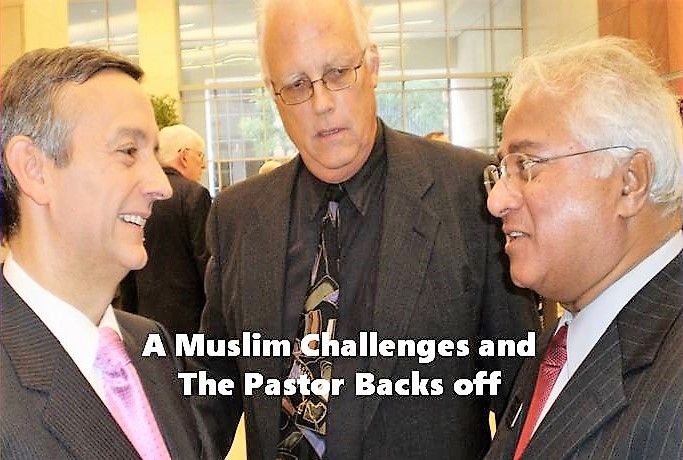
Like most of the right-wing conservatives, Pastor Robert Jeffress lives in a bubble believing in self-aggrandizing information, and aggressively seeking to take advantage of his microphone to get ahead of others in the business of influence. He has done that both in politics and religion and has failed miserably. Continued: http://theghousediary.blogspot.com/2012/12/texas-faith-is-religious-rights.html
Texas Faith: Is the Religious Right’s considerable influence on politics over?
The Texas Faith blog is a discussion among formal and informal religious leaders whose faith traditions express a belief in a transcendent power – or the possibility of one. While all readers are invited to participate in this blog, by responding in the comments section, discussion leaders are those whose religion involves belief in a divine higher power or those who may not believe in a transcendent power but leave room for the possibility of one. Within this framework, moderators William McKenzie and Wayne Slater seek to bring a diversity of thinkers onto the Texas Faith panels.
This week’s question has two parts: 1) Should Christian conservatives in the future follow Jeffress’ advice and avoid making prudential issues in which voters can disagree part of their central moral agenda? And 2) even if they do, will it make any difference? Is the era of religious right’s considerable influence on politics a thing of the past?
MIKE GHOUSE, President, Foundation for Pluralism, Dallas
Pastor Jeffress is a politician in the religious garb, not a good politician but the one scanning for opportunities to his advantage, his advice is yet to make sense.
Like most of the right-wing conservatives, he lives in a bubble believing in self-aggrandizing information, and aggressively seeing to take advantage of his microphone to get ahead of others in the business of influence. He has done that both in politics and religion and has failed miserably.
When the evangelicals ganged up on Romney, and unleashed Santorum as the conservative candidate, Jeffress came down on Romney, ruefully representing the Baptist Church and denouncing Romney’s Mormonism. The Moderate Republican majority dumped Santorum and other candidates with sectarian views and opted for Romney, who represented moderation at that time, but when Romney donned on the conservative avatar to clutch the nomination, Jeffress was out again with an embarrassing compromise; supporting Romney.
The moral agenda of the conservatives is to stand firmly against abortion, and same sex marriage, whereas Americans want to live by the First Amendment: government out of religion and their lives. Ironic as it may sound, the conservatives wanted to impose their views on others, and go against the very essence of constitution they purportedly want to uphold. If I were his congregant, I would have advised him to preserve the dignity of church and stay out from falling flat on his face again.
On religious side, Jeffress made a preposterous statement, “Qur’an is a false book written by a false prophet….” to a standing ovation from his congregation. He knew he was wrong and did not take up my challenge, “that if he finds faults with Qur’an, I will convert to his Faith, if not, I asked him to be a blessed peace maker that Jesus had wanted us to be. We held the Quraan conference anyway with 10 non-Muslim religious clergy and honored him for causing the truth to be otherwise. Details at www.QuraanConference.com
The era of religious right’s considerable influence on politics is indeed a thing of the past.
# # #
Published in Dallas Morning News. Message from all contributors at:
http://religionblog.dallasnews.com/2012/12/texas-faith-is-the-religious-rights-considerable-influence-on-politics-over.html/
# # #
Mike Ghouse is a speaker, thinker and a
writer on pluralism, politics, peace, Islam, Israel, India, interfaith, and cohesion at work
place and standing up for
others as an activist. He is committed to building a Cohesive America and offers
pluralistic solutions on issues of the day at www.TheGhousediary.com. Mike has a
presence on national and local TV, Radio and Print Media. He is a frequent guest
on Sean Hannity
show on Fox TV, and a commentator on national radio networks, he contributes
weekly to the Texas Faith Column at Dallas Morning News, fortnightly
at Huffington post, and
several other periodicals across the world. His personal site www.MikeGhouse.net indexes everything you
want to know about him.